Published on 4 August 2026

Claire Collins (Project Lead) – National Trust

Sicily Fiennes (Project Lead) – National Trust

Siobhan Vye – National Trust

David Bavin – National Trust

Bryony Aitchison – National Trust

Matthew Heard – National Trust

Sarah Crowley – University of Exeter
ExCASES missions provide short, intense periods of focus towards issues communicated as priorities for RENEW partner organisations and external stakeholders. The ExCASES team work collaboratively with people across different sectors and disciplines, co-designing research and participatory processes to generate empowering outcomes for people and the environment.
With advances in marine conservation science and practice, human influence is intensifying across our oceans. Repeated negative interactions between humans and marine species can lead to Human Wildlife Conflict (HWC), causing negative impacts for both people (e.g. economic losses) and nature (e.g. habitat disruption). Theoretical approaches and case-study evidence for HWC tend to be focused on terrestrial systems, with marine systems comparatively understudied and poorly conceptualised, resulting in fragmented and reactive management approaches.
This mission aims to fill this research gap by providing better understanding of HWC in marine contexts and knowledge to help move us towards management approaches that support marine Human Wildlife Coexistence (HWCx). Our aims include to:
This mission will convene interdisciplinary researchers and practitioners from across conservation science, political ecology, human geography, and applied management to share insights from both terrestrial and marine contexts. We will be bringing these stakeholders together at a workshop at the International Marine Conservation Conference (IMCC8) in Edinburgh in November 2026. We will use facilitated, structured group discussions to examine the above research questions, which will feed into a peer-reviewed perspective piece co-authored by attendees exploring mechanisms to support ongoing knowledge exchange and practice. The paper aims to be one of the first to identify key priorities in terms of research and management for marine human wildlife conflict.
This mission will produce a peer-review perspective piece designed to stimulate further discussion and research into marine human wildlife conflict. It is hoped that this will feed into other growing networks of researchers and practitioners working in marine human wildlife conflict, with further outputs to be identified as the project progresses.
The paper will be linked here once published.
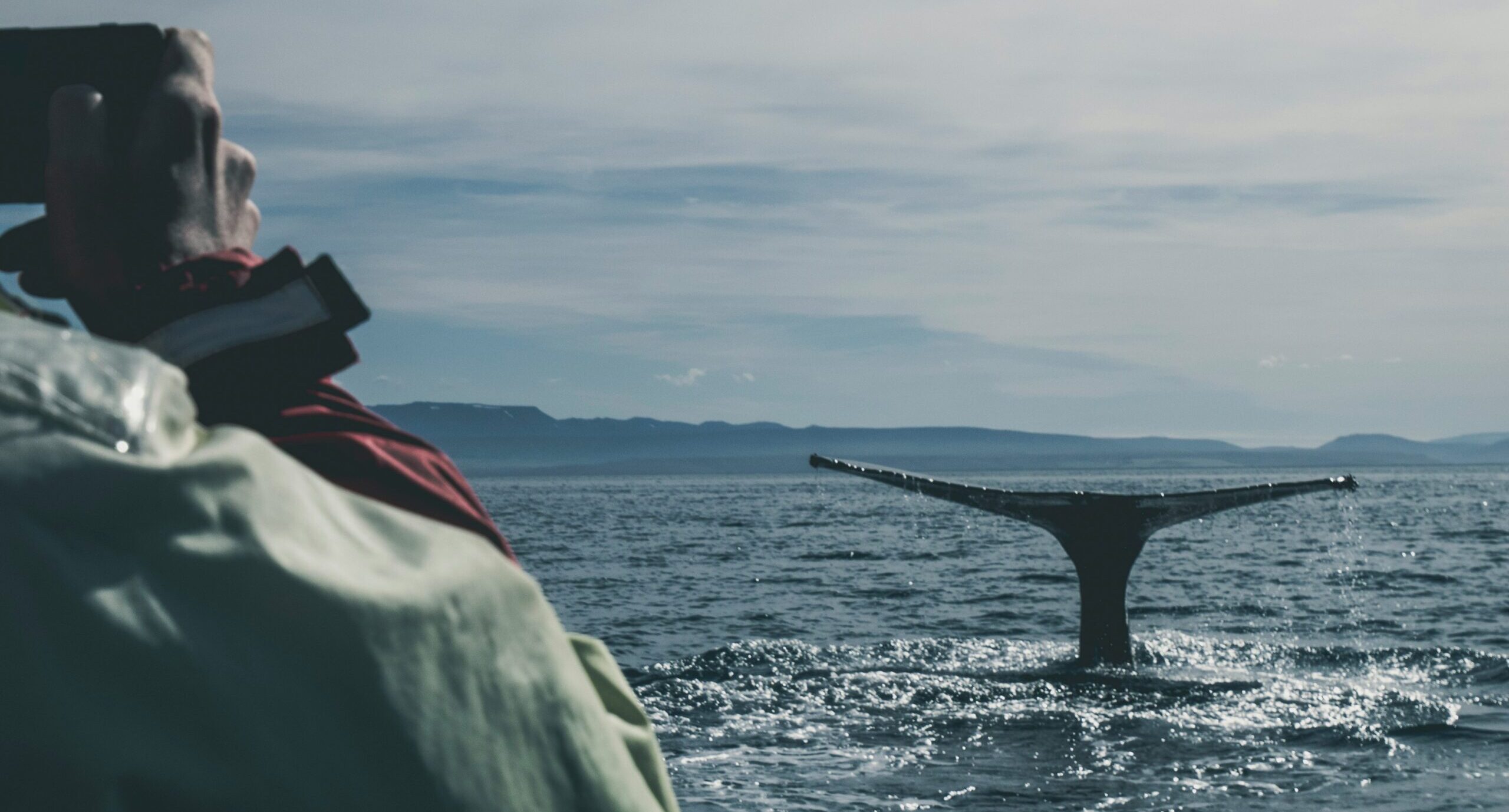
Banner image by Davide Cantelli on Unsplash