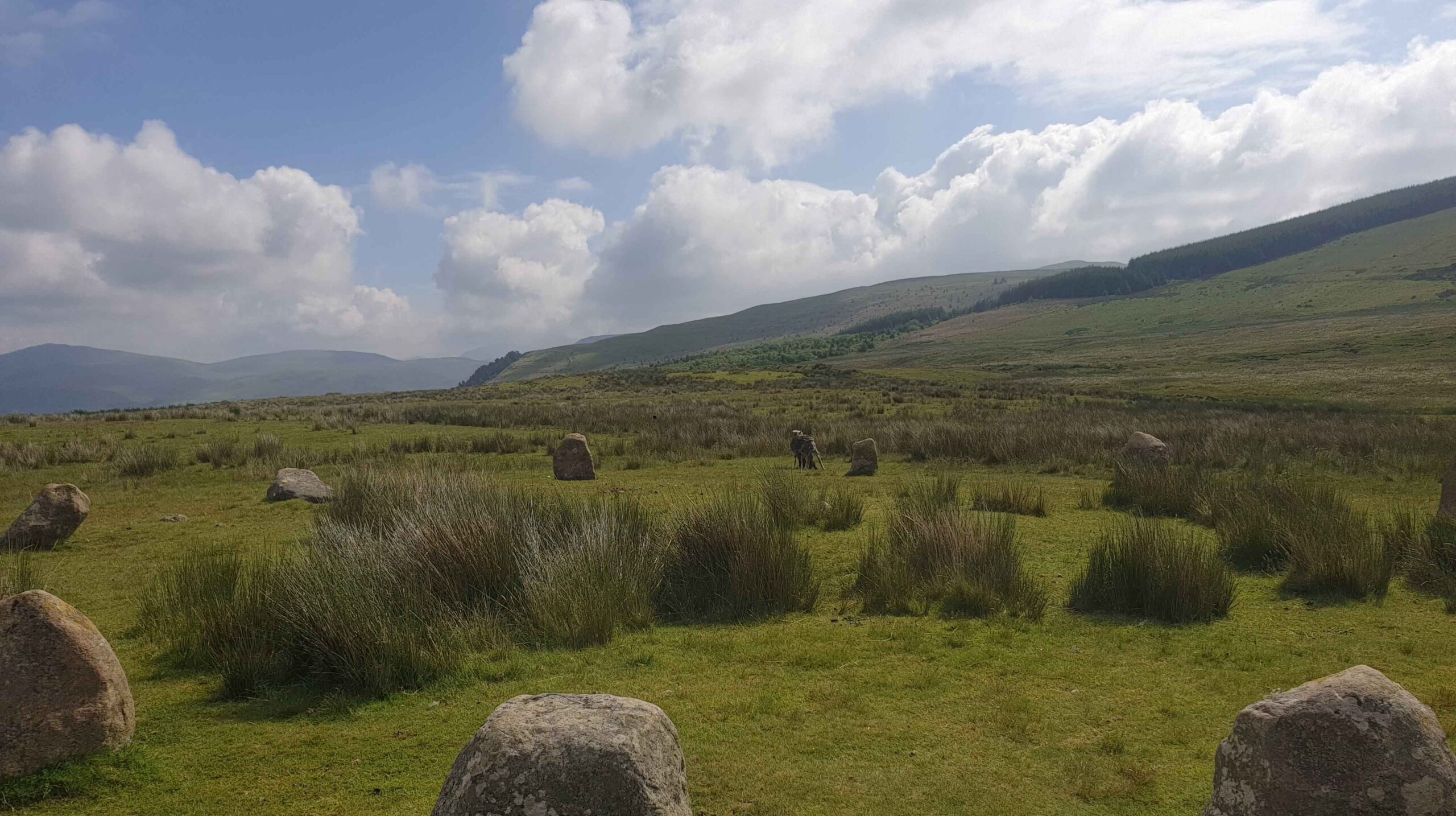
Members of the RENEW team often take photographs during field work or site visits for a variety of reasons, such as visual recording for the research itself, or to use them blogs and PowerPoints for research dissemination. Photography is useful for illustrating the work and bringing life to the research. The photographs are often beautiful in their own right and can demonstrate biodiversity – or lack thereof – at a particular point in time.
“Most Lake District photography available online is either not open-access or doesn’t necessarily show what I am trying to talk about (e.g., different aspects of sheep farming, upland vegetation like peatlands, grasslands, heath, exclosures etc.) So I take my own.”
– Jo Furtado, PhD student focusing on commoners – farmers who graze their stock on common land.
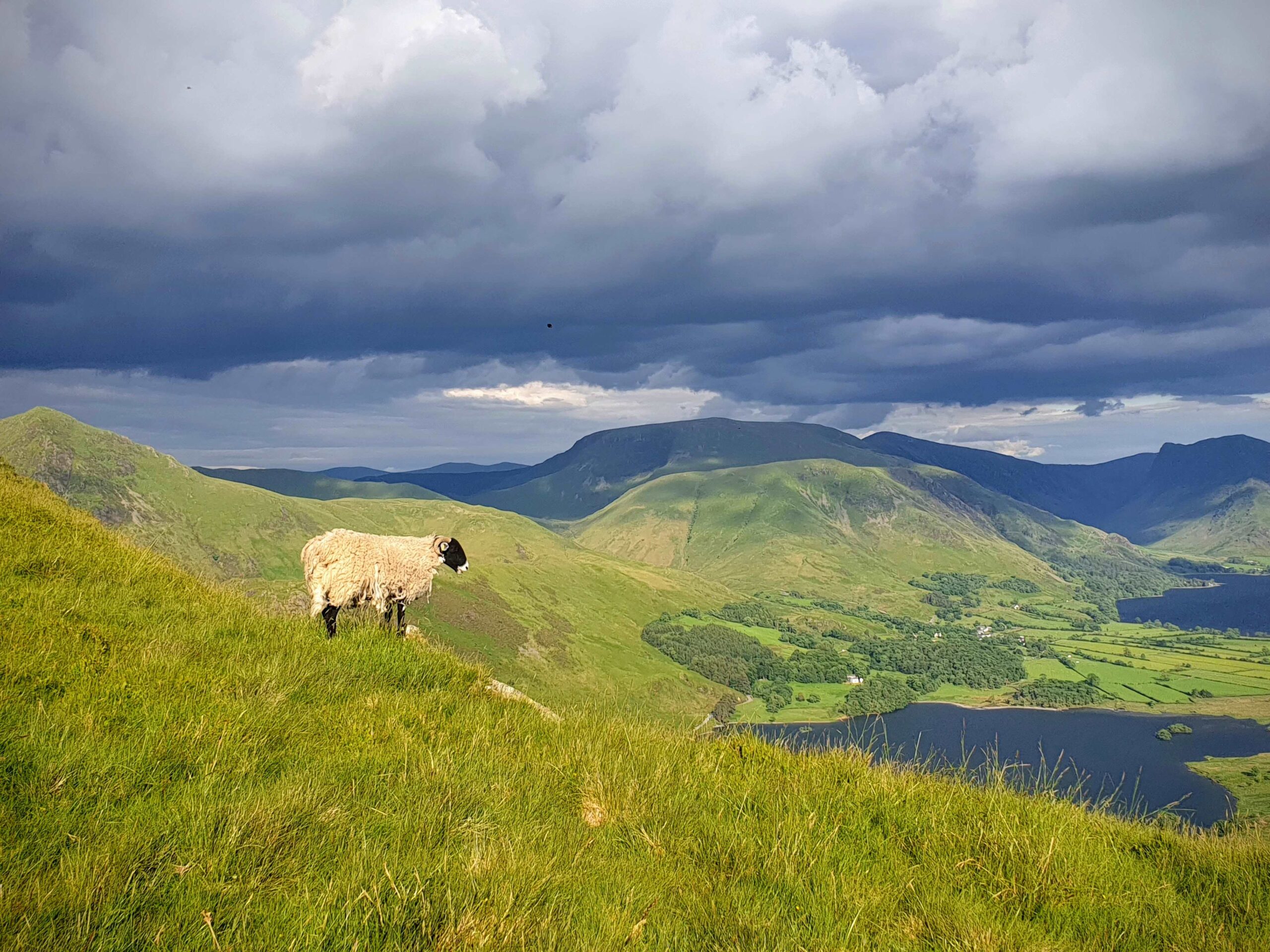
Image credit: Jo Furtado
Swaledale sheep on Mellbrake Fell in the North West of the Lake District, overlooking Crummock Water and Buttermere. Swaledale sheep are one of the main sheep breeds in the Lakes along with Herdwicks and Rough Fell sheep. These breeds are known for being hardy and able to survive the poor forage and relatively tough conditions of a life on the fells. Even then, the vegetation is slow-growing and low in nutrients so these landscapes can support low numbers of sheep only.

Image credit: Jo Furtado
A peat bog on the top of Lank Rigg, a fell on Kinniside Common, in the West of the Lake District. The bog, known as Poukes Moss, is in a relatively good condition: it is shown here in winter but you can see the hummocks of mosses and cotton grass that help to keep the ground wet and create the anaerobic conditions in which peat forms.
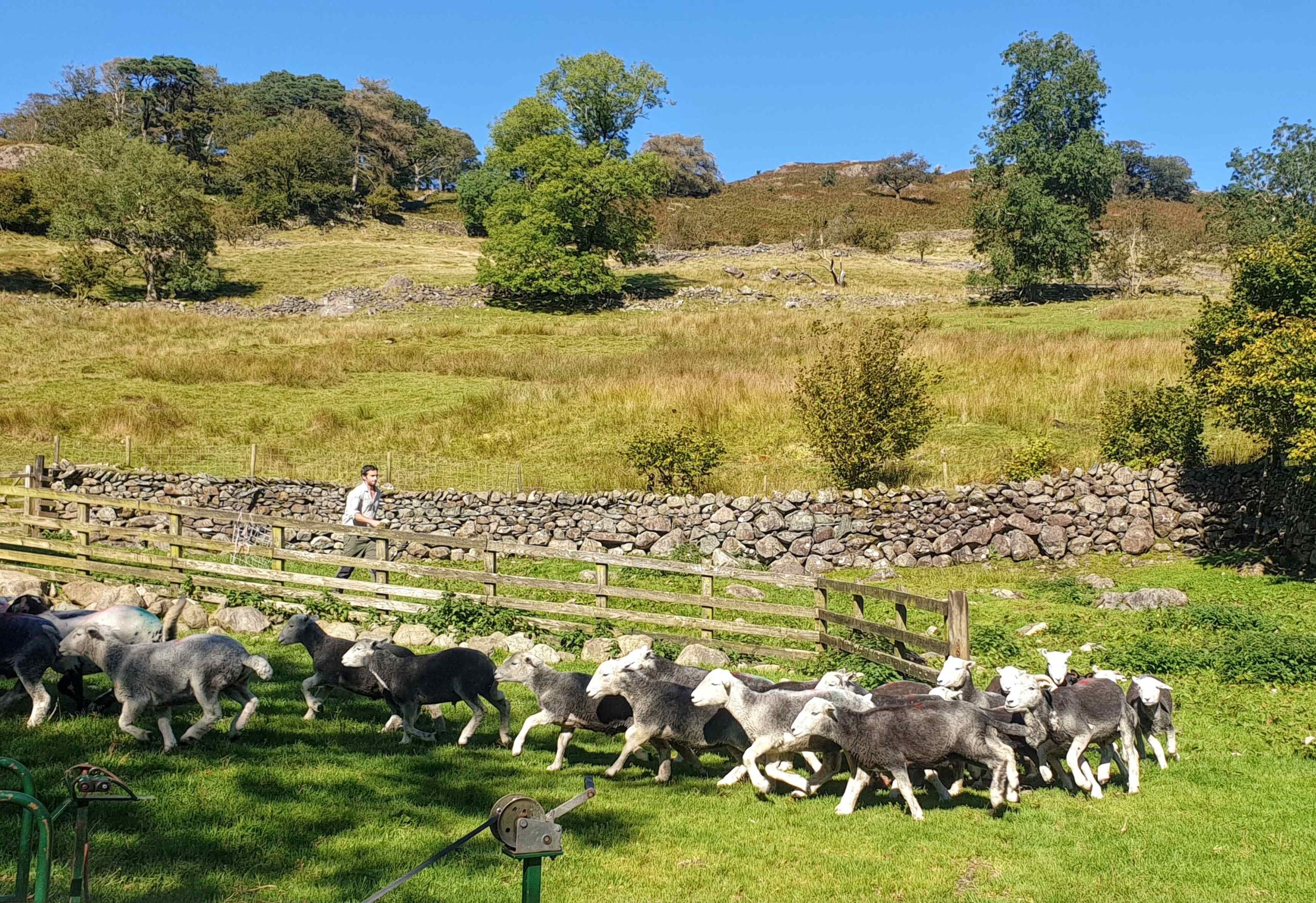
Image credit: Jo Furtado
A farmer demonstrating sheep gathering as part of a hill farming training course run for the National Trust in Borrowdale. The farmer used sheep dogs to collect this group of Herdwick sheep down from the fell and into a sorting pen, where they were sorted into whether they belonged to his farm or to neighbours’ farm. They tell this by the ‘smit’ marks on the sheep (see the blue and red marks on the sheep in the picture), with each farm having their own unique smit mark. Sheep are returned to their own farms at a shepherds meet once the whole fell has been gathered.
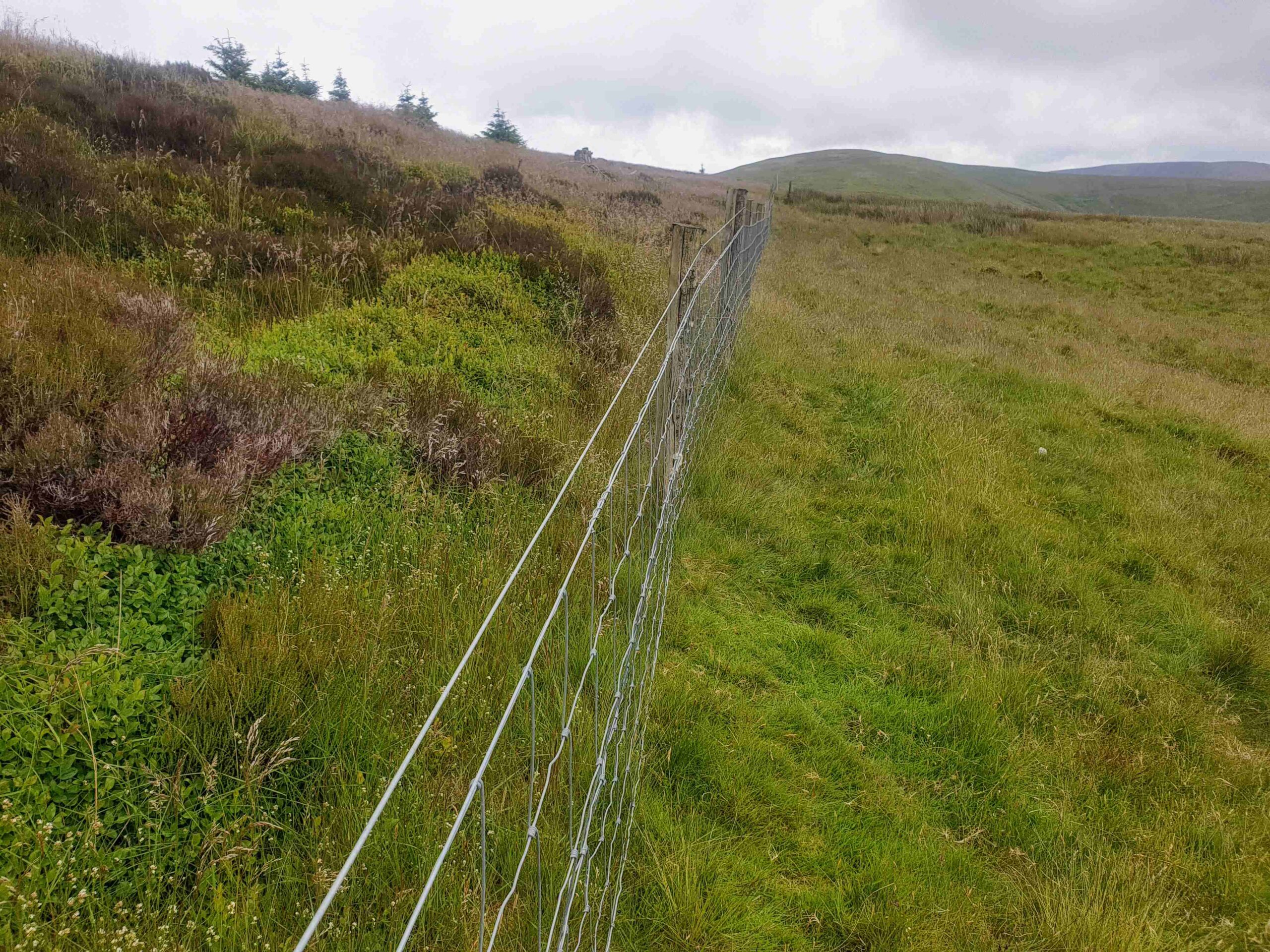
Image credit: Jo Furtado
This shows a fence on Kinniside Common, one side of which is common land grazed for centuries by sheep and cows, and the other side of which is old forestry land from which trees were felled about a decade ago. Where the soil was disturbed when the trees were felled and then the land left to regenerate without grazing, you can see lots of dwarf shrubs like heather, bilberry etc., whereas the grazed side is mainly grassland. This shows how land in the same environmental conditions can look very different depending on management and helps with imagining how a fell ‘could be’.