Published on 21 September 2026
Welcome to the first of our Q&As with RENEW PhDs. Daveron Smith explains how his work at Natural England fed into his PhD and vice versa.
Can you tell us about your work at NE prior to embarking on your PhD?
I joined Natural England’s Chief Scientist Directorate as a Data Scientist. I worked on species modelling, including for great crested newts, and helped design sampling approaches for monitoring protected sites. It gave me a good grounding in how data and modelling are actually used to support conservation decisions.
What made you decide to do a PhD?
I was part of the team that developed the Exeter Memorandum of Agreement, and I’ve always been interested in the science-policy interface — particularly how government can work well with academia and other partners to make sure policy is based on the best possible evidence.
Doing a PhD gave me a chance to step back into academia and understand a bit more about how it works from the inside — what motivates people, how research priorities are set, and where the opportunities and frustrations are. I thought that understanding both sides better would help me build stronger partnerships between government and academia in future.
What made you choose to study the topic, and willow tits in particular?
I’ve always been interested in habitats that can be a bit overlooked. Wet, scrubby, untidy-looking places don’t always get the same appreciation as mature oak or beech woodland, but they can be really important for wildlife.
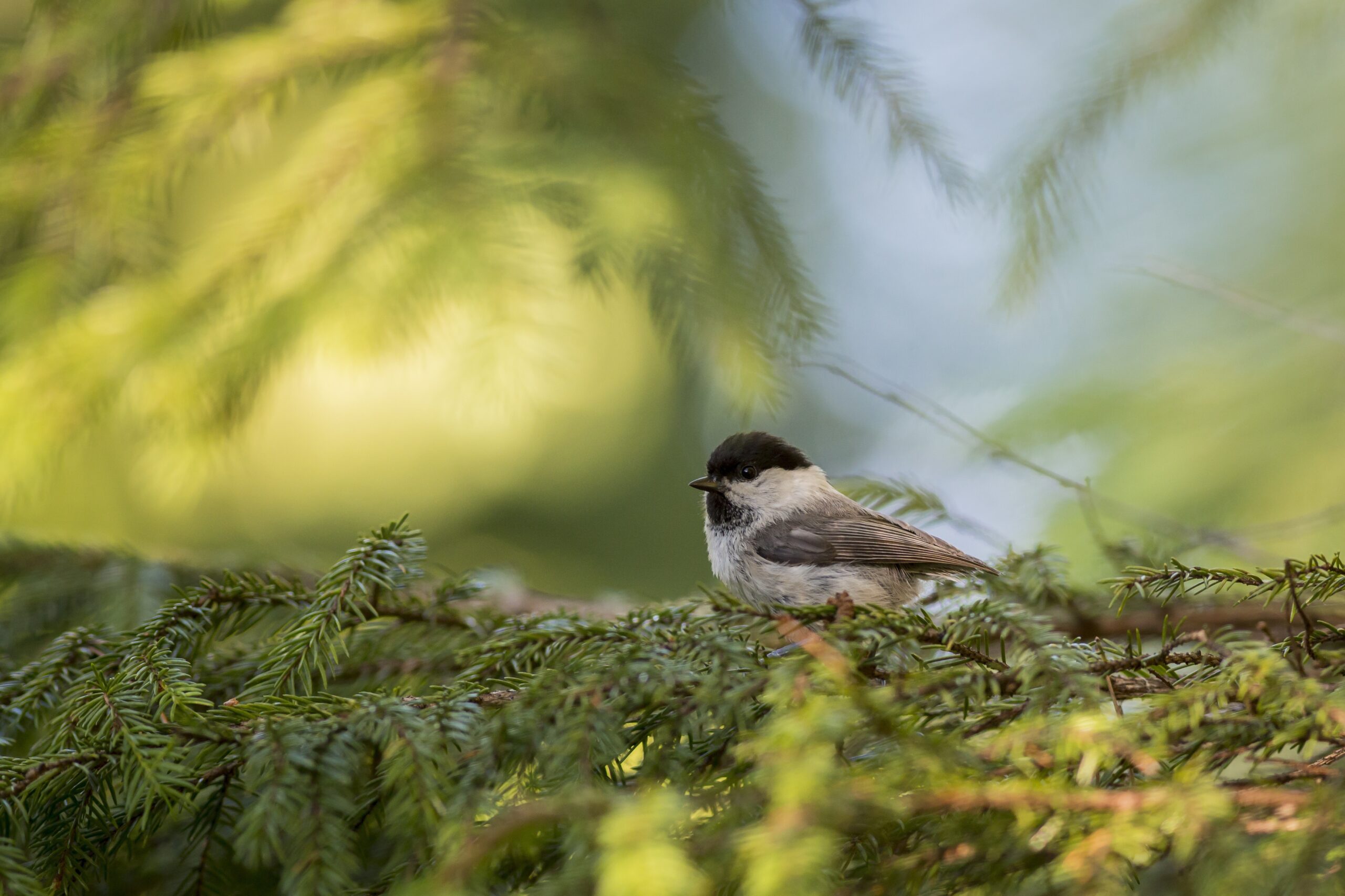
Willow tits are Britain’s fastest-declining resident bird, so they were a really interesting species to work on. But for me they were also a way into a much bigger question. What evidence and modelling do we actually need if we want to turn around biodiversity decline? And once we have that evidence, how do we communicate it in a way that means citizen scientists, land managers and decision-makers can actually use it?
How did you manage to combine your research and practice while you studied, and was there any advantage to having your NE experience?
Staying connected to Natural England throughout the PhD was a big advantage because it kept the research grounded in real conservation problems.
For example, I built strong links with the team managing parts of Goss Moor in Cornwall, which is an important area for willow tits. That meant I could understand the questions they were dealing with on the ground and think about how the research could be useful to them.
Working within NE also meant I had a good sense of emerging priorities, funding opportunities and species recovery work. That’s helped us take the research beyond the PhD itself. We’ve since secured substantial funding through the Species Recovery Programme to continue the work on Cornish willow tits.
What was it like working with volunteers and stakeholders?
That’s probably been one of the most enjoyable and important parts of the work. You simply couldn’t collect this kind of data at the same scale without volunteers and local experts.
The volunteer network in Cornwall has been hugely important. They’ve helped us gather enough information to start answering questions that would otherwise have been very difficult to tackle. Just as importantly, that network has helped us show that there is real value in the work and that there is a group of people committed to continuing it.
That has helped us make the case for further funding through the Species Recovery Programme, which means we can keep building our understanding of Cornish willow tits rather than the work stopping at the end of the PhD.
It’s also been a reminder that good conservation science isn’t just about producing a clever model. You need people to trust the work, contribute to it and see how it can help them make decisions.
What difference has your PhD work made and what are the next steps?
One of the clearest outcomes has been the work feeding into management at places like Goss Moor and into wider species recovery activity.
We’ve also secured a sizeable amount of funding through the Species Recovery Programme to continue the work on Cornish willow tits. That feels particularly important because it means we can build on what we’ve started rather than treating the PhD as a standalone project.
A big part of that has been the volunteer network. Their contribution has allowed us to collect data at a scale that shows what we can bring to the table and gives us a much stronger basis for asking for continued investment.
There are also methods from the PhD that I’d like to take back into Natural England and use on other problems, particularly around species and spatial modelling.
I’ve also done work on participatory mapping — bringing together model outputs with what people on the ground know and care about. I’d like to see more of that kind of approach used in programmes such as the Nature Restoration Fund.
So although the PhD focused on willow tits, a lot of what I’ve learned is much more widely applicable.
What will your role going forward be at NE and how has your PhD helped you?
I’ve recently secured the Principal Data Scientist role at Natural England. I’ll be overseeing our species modelling and some of our wider spatial modelling work.
A big part of the role is making sure our approaches keep developing and that we’re looking outward for new methods, new ideas and new ways of working with others.
The PhD has helped with that because I’ve had the chance to understand academia from the inside as well as government science. Knowing a bit more about how academics think, what they’re trying to achieve and how their processes work makes it much easier to build useful partnerships.
Longer term, I’d like Natural England to be recognised as somewhere that does really strong work in species modelling and systematic conservation planning, and as an organisation that academics want to work with.
What advice would you give future early-career researchers, knowing what you know now?
Particularly in the environmental sciences, I’d really encourage people to get some experience outside academia if they can.
That could be a placement, a secondment, work with a policy team, time with farm advisers, land managers or conservation practitioners — basically spending time with the people you hope will eventually use your research.
Understanding their pressures, priorities and ways of thinking is incredibly useful. It changes the kinds of questions you ask and the way you communicate your findings.
If you want your research to influence decisions, understanding the people making those decisions is just as important as understanding the science.
You can read more about Daveron’s PhD on the RENEW website: RENEW > Monitoring Willow tit occupancy in Cornwall to inform land management decisions